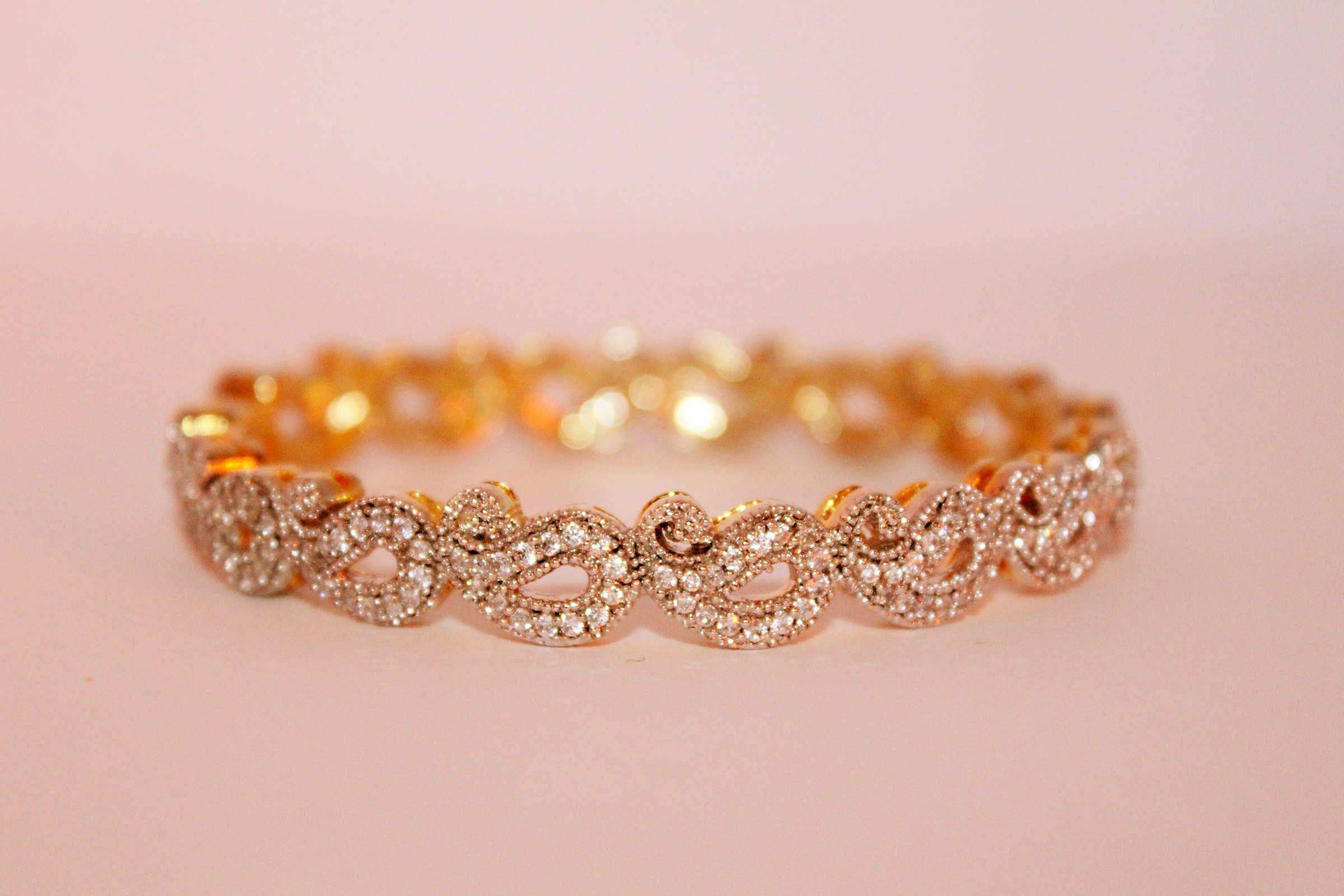
Cushion is a square or rectangular shape with softly rounded corners — like a pillow. It's one of the oldest shapes (mid-1700s, "Old Mine Cut") and was the standard before round brilliants took over in the 20th century.
Modern cushions use a brilliant-cut facet pattern. They sparkle differently from round — broader flashes of light rather than rapid pinpricks. People describe them as "softer" or "more romantic." Vintage-style settings (halos, milgrain bands) flatter cushions; modern bezel settings work too.
Pricing 15-20% below round. The rounded corners eliminate the chipping risk of princess cuts.
Length-to-width ratio for cushions: 1.00-1.05 is "true square," 1.10-1.20 is "elongated cushion." Both are valid; pick the look you like.
At a glance
- Price vs round
- -18%
- Face-up coverage
- 0.95×
- Sparkle character
- Soft brilliant
- Resale liquidity
- Strong
- Length-to-width
- 1.00-1.05 square, 1.10-1.20 elongated
- Clarity to buy
- SI1 is usually enough (facet style hides)
- Colour
- G-H floor in white metal
- Setting
- Halo, milgrain, or a plain bezel
- Watch out for
- Chunky vs crushed-ice facets — not on the report
Where the cushion comes from
A cushion is a square or rectangle with softly rounded corners, and it is one of the oldest outlines in the trade: the Old Mine cut that dominated before round brilliants took over in the 20th century. Modern cushions keep the pillow silhouette and rework the facets inside it.
What you get back is a different light character. Cushions throw broader flashes rather than the rapid pinfire of a round — people describe the look as softer or warmer — and the rounded corners mean none of the chipping risk a princess carries.
Two facet styles under one name
This is the thing almost every cushion buyer gets wrong, because neither style is mentioned on the certificate.
Chunky (brilliant-style) cushions
A handful of large facets producing big, bold flashes. This is the closer descendant of the old cushions, the version that photographs as "romantic". Larger facets also mean an inclusion under the table has fewer places to hide.
Crushed-ice cushions
Many small facets that break light into fine sparkle spread evenly across the face. It masks inclusions and body colour extremely well and can look slightly busy or flat in soft lighting — some buyers love the shimmer, others find it dull next to a chunky stone.
How to choose between them
You cannot tell them apart from a report: depth, table and girdle read the same on both. Watch video under a light and tilt the stone — large and few flashes means chunky, small and everywhere means crushed ice. Decide which one you like before you start comparing prices, or you will compare two different products and buy the wrong one.
Proportions, clarity, and colour
Ratio is a real choice here rather than a pass/fail: 1.00-1.05 is a true square cushion, 1.10-1.20 an elongated one. Both are correct — elongated flatters shorter fingers, square keeps the classic pillow read. Depth runs on the deep side for the cut, so trust millimetres over carat as always.
Clarity is where crushed ice pays for itself: SI1 is usually invisible and VS2 is a very safe floor. On a chunky cushion with a large open table, use VS2 as the floor and read the plot. For colour, G-H is the safe zone in white metal; in yellow gold I-J faces up white because the broad flashes wash tint out.
Settings, mistakes, and who it suits
Settings that suit it
The most setting-flexible fancy cut there is. Vintage mounts — halos, milgrain bands, filigree — suit its heritage, a plain bezel reads modern, and three-stone arrangements with tapered baguette sides work in either direction. Rounded corners mean no prong placement is structurally wrong.
Mistakes buyers make
Buying without seeing the facet style; landing on an extreme ratio by accident (a 1.25 cushion is a rectangle, not a pillow); paying for VVS clarity on a crushed-ice stone that would have hidden an SI1; and ignoring depth, because cushions hide weight below the girdle.
Who it suits
Someone who wants sparkle with a softer edge and a shape that works in both vintage and modern settings. It is the standard answer for "I don't want a round, but nothing dramatic either".
Price, resale, and what to expect
The comparison table puts cushion 18% under round, the site's pricing guidance says 15-20%, and the calculator model applies 0.82×. Three different measurements, same conclusion: you are paying meaningfully less per carat for a shape with no structural weakness.
Resale is rated Strong. Cushion demand has risen with the vintage-ring trend and the shape is well known to second-hand buyers, but like every fancy cut it sells below a round of equal specification. If a future sale is likely, favour a GIA report and a clean plot over extra spread, and keep the report with the ring.
Frequently asked questions
What is the difference between a cushion and a princess?
Outline first: a cushion has rounded corners and no chipping risk, a princess has four sharp points that need V-prongs. Inside, a cushion can be chunky or crushed-ice faceted, while a princess is always the chevron brilliant pattern. Price is similar — both sit 15-18% under round.
Crushed ice or chunky — which should I buy?
Chunky if you want big flashes and a link to the old mine cuts; crushed ice if you want dense sparkle, want to buy a lower clarity grade safely, or are buying in a colour below H. It is a taste call, and video is the only way to make it.
Do cushions sparkle as much as rounds?
Differently rather than less. A cushion trades the round's fast pinfire for broader flashes, which is why the comparison table calls the sparkle character "soft brilliant". If scintillation is the point of the purchase, look at a round or an oval instead.
What length-to-width ratio is best?
1.00-1.05 for the true square pillow, 1.10-1.20 for an elongated cushion. Past 1.25 the stone stops reading as a cushion and becomes a rectangle with rounded corners. Check the millimetre dimensions on the report rather than trusting the shape name.